


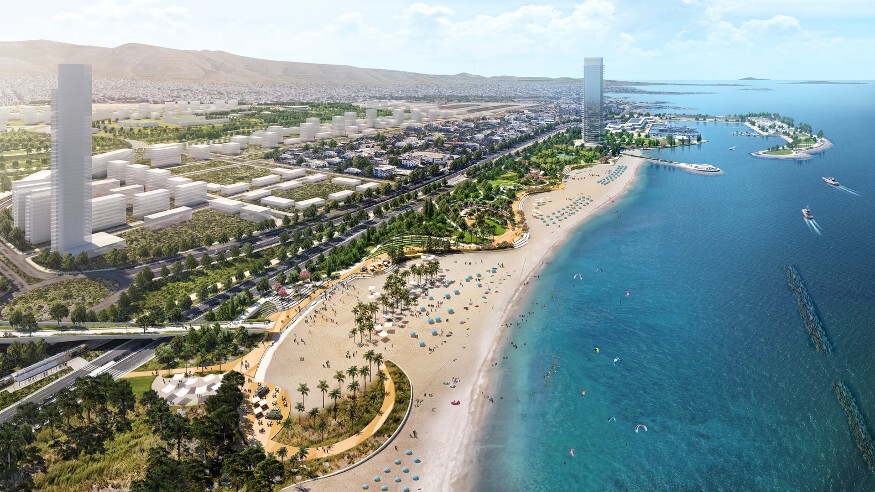
Located 7 kilometers south of Athens and west of Glyfada, the Ellinikon/Hellinikon International Airport in Greece was the main airport of Athens for 60 years, until it closed in 2001 and was replaced by the new Eleftherios Venizelos Airport. This led to two decades of work by the local government to establish funding and a governance mechanism to transform the 600 acres of unused space into the largest coastal park in Europe. The site has a layered history, from prehistoric settlements to the construction of the airport in the 20th century, and it was used as an Olympic venue in 2004.
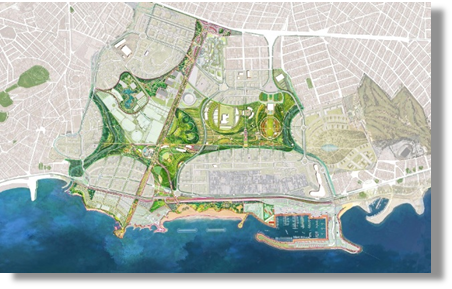 |
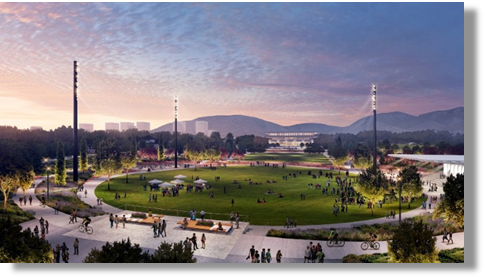
A Japanese architecture firm is leading the design to transform the site again and create the Ellinikon Metropolitan Park, which will serve as a park, playground, and cultural center for the city of Athens. Developers plan to break ground in early 2023. |
|
The site’s history is one of the starting points for the design. The 1960s terminal hall, designed by Eero Saarinen, will be preserved and adaptively reused as the centerpiece of a large event space in the heart of the development. The designers are also considering the character of public spaces in Athens, many of which are passive landscapes adjacent to ancient ruins or urban squares and streetscapes. The new park aims to help citizens reconnect with nature and rekindle a cultural affinity for the Greek landscape. The intervention will also increase open space allocation per resident in Athens by 44%. |
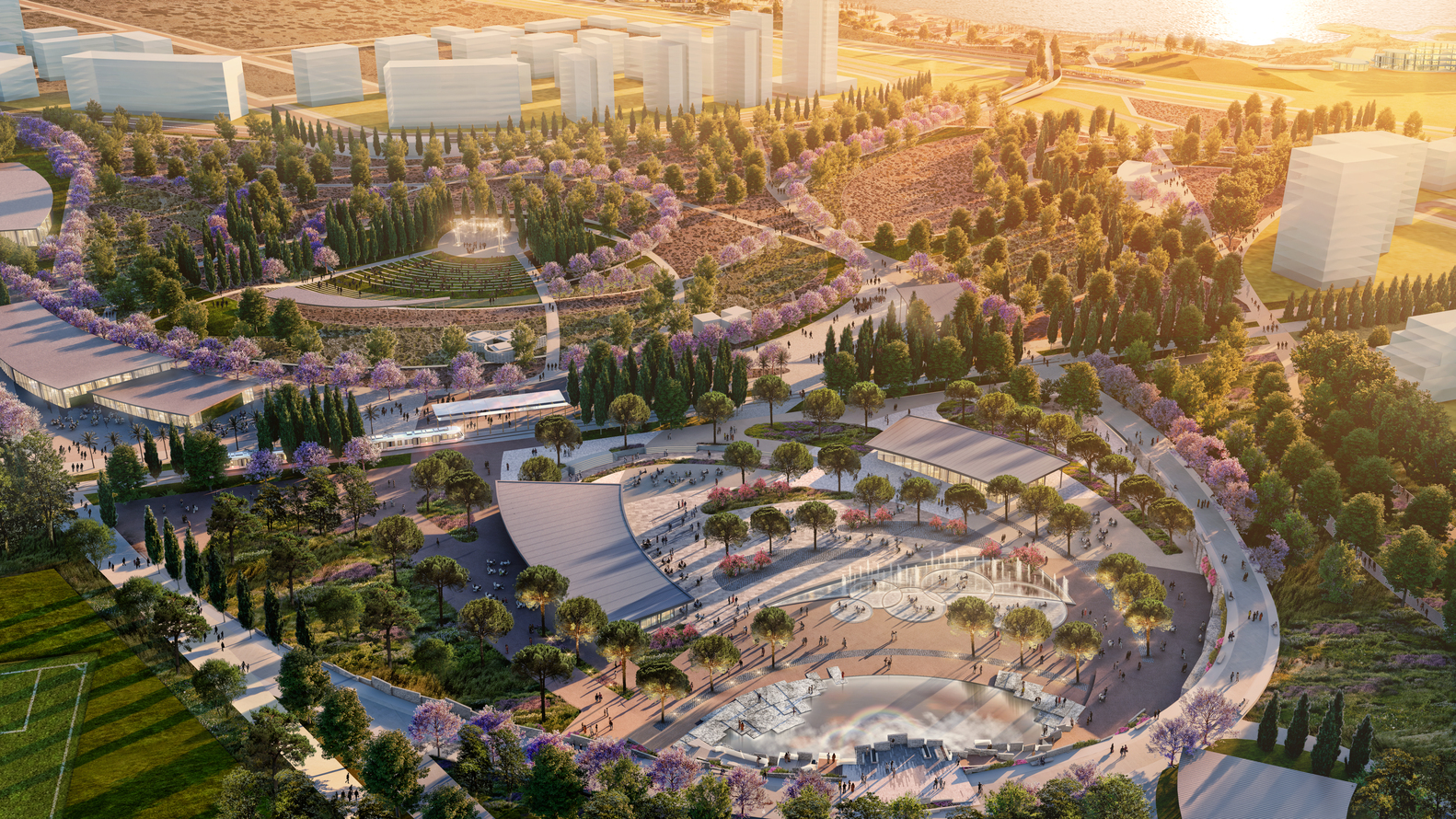 |
More than 30,000 new trees from 86 species have been selected for their ecosystem services and adaptability to the site’s distinctive soil profile, transforming the area into a biodiversity hotspot. |
| Water scarcity was also a concern. Through efficient water management and conservation strategies, the water demand for irrigation is met entirely through reclaimed water. A former Olympic canoe/kayak site has been repurposed to collect rainwater during the wet season. The lake includes a recirculating wetland area and serves as an emergency reservoir for drought and fire mitigation. Wetlands, rain gardens, and a network of bioswales complete the vision of Greece's largest green infrastructure installation. | 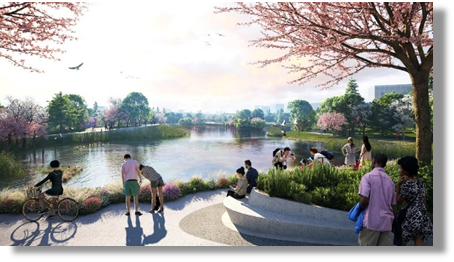 |
 |
The design leverages existing material resources and prioritizes sustainable, long-life cycle materials to reduce the park’s overall carbon footprint. Concrete from the existing airport runways is reused throughout the park to tell the story of the site’s past. |
|
Using the Carbon Conscience and Pathfinder tools, design decisions were based on increasing sequestered and stored carbon and reducing embodied carbon. In 35 years, the Ellinikon Metropolitan Park will achieve carbon neutrality. Soil management, material reuse, efficient water systems, food and energy production, and habitat creation will all contribute to a functional landscape focused on ecological restoration, climate sensitivity, and equitable access for Athenians.
|
You can find the article here.