


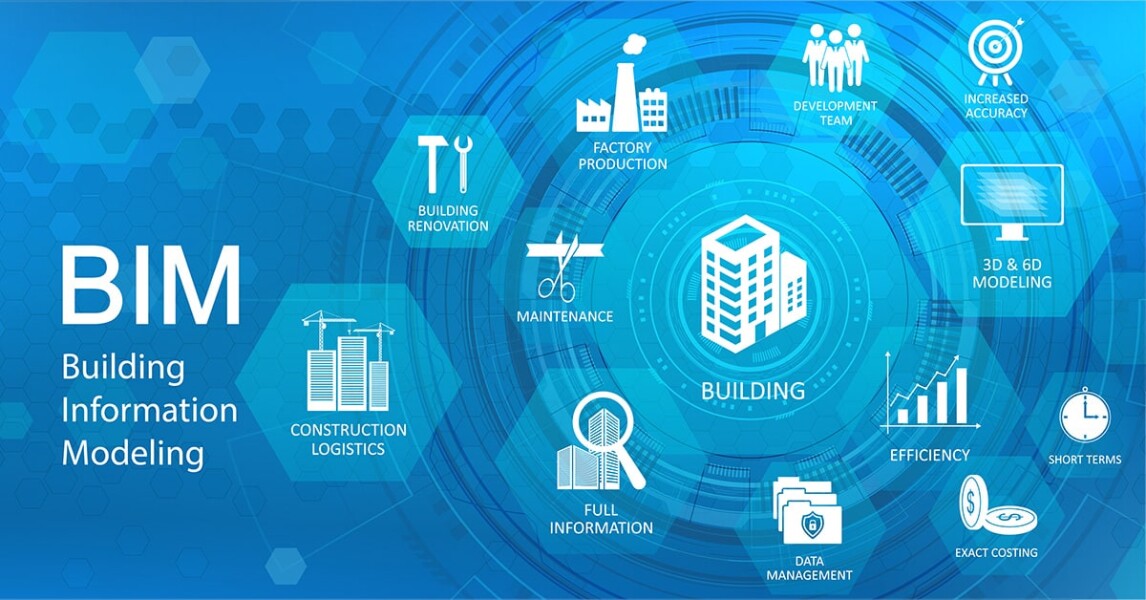
BIM is a PROCESS. A collaborative development process.
The subject of BIM is already well-known by many involved in the construction field (AECO). What it is, the advantages it brings, and how BIM will be adopted in our country is generating increasing interest.
Currently, a "Roadmap for BIM Implementation at the National Level" is being developed, which establishes the necessary steps for the adoption of BIM in Romania. The document defines the actors and measures that will ultimately lead to the adoption of the BIM methodology in public investment projects. Adopting the BIM methodology is both very useful and very challenging to implement if the specific concepts are not well understood in the same way by all involved parties. The stakeholders in the construction field are not just professionals: architects and engineers; they include all specialists working in construction. Therefore, this article presents the levels of maturity and dimensions of BIM in simple language.
BIM is a collaborative work process aimed at increasing the productivity of activities specific to the construction field, thereby achieving significant reductions in resources (costs and time). Based on information models and predefined workflows, it allows easy real-time collaboration among stakeholders involved in all stages of a construction project's life cycle. The major advantages of collaborative work lie in identifying obstacles before they cause bottlenecks, reducing errors through the correlation of activities from various disciplines, thus leading to better strategies for both the construction phase and the operation of assets. The figure below compares the traditional way of working and the collaborative approach with reference to the single source of truth.
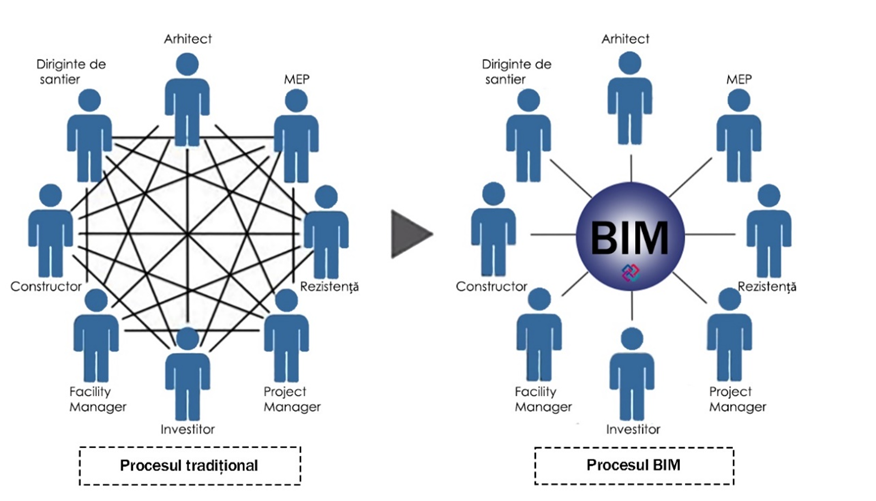
Fig.1 – Information flow between involved parties
Often, we refer to the BIM information management process as the "BIM methodology."
Over time, all stakeholders will understand that to obtain the advantages offered by information management, it must be based on two general concepts: quality assurance alongside asset and project management, as well as successfully implementing these in the organizations' processes.
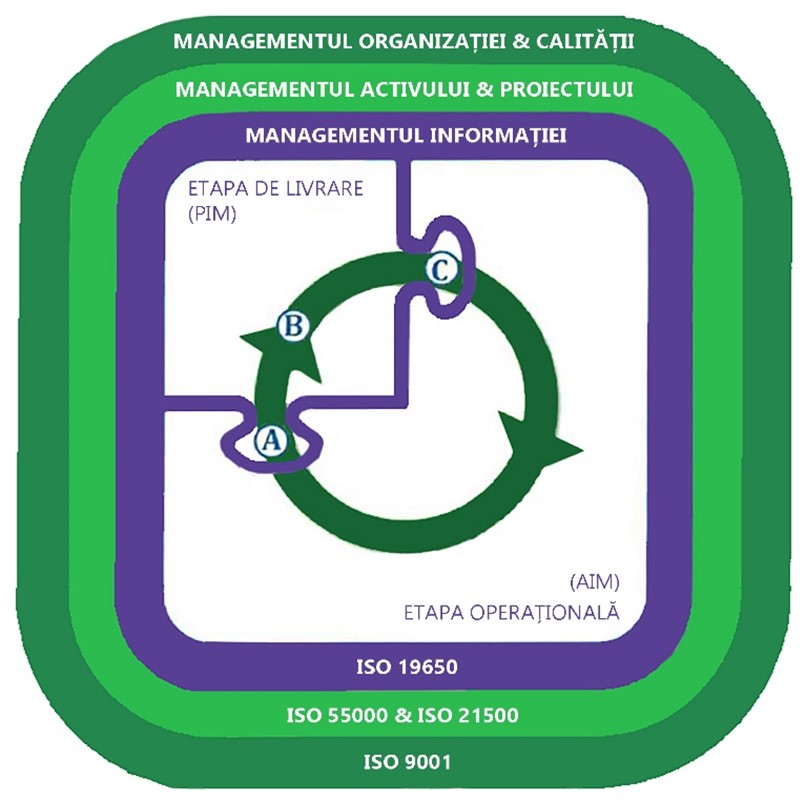
Fig.2 – BIM operational processes are based on already known processes within the organization
(excerpt from SR EN ISO 19650-1:2019, with permission from ASRO)
- PIM = Project Information Model
- AIM = Asset Information Model
- A = beginning of the investment delivery stage (information about the construction is gathered, if applicable)
- B = progressive development of the information model
- C = completion of delivery - acceptance. Relevant information from PIM is transferred to AIM
The BIM process consists of two stages: 1) the delivery stage, during which data is gathered in PIM (Project Information Model) as the investment moves from planning to acceptance, and 2) the operational stage, following acceptance, when data from usage processes and maintenance activities is gathered in AIM (Asset Information Model).
BIM Maturity Levels
In this BIM methodology, which describes roles, conditions, deadlines, and specifications, things become complex. Thus, for good collaboration throughout the life of an investment, all involved must understand the basic concepts. The core concepts and ideas of the BIM methodology are best presented through BIM maturity levels and dimensions. Additionally, the way they are interrelated makes the concepts clearer.
Because a picture is worth a thousand words, the figure below schematically presents the connection between maturity levels and BIM dimensions. This representation is frequently used to aid in understanding concepts, notions, and correlations within the BIM process.
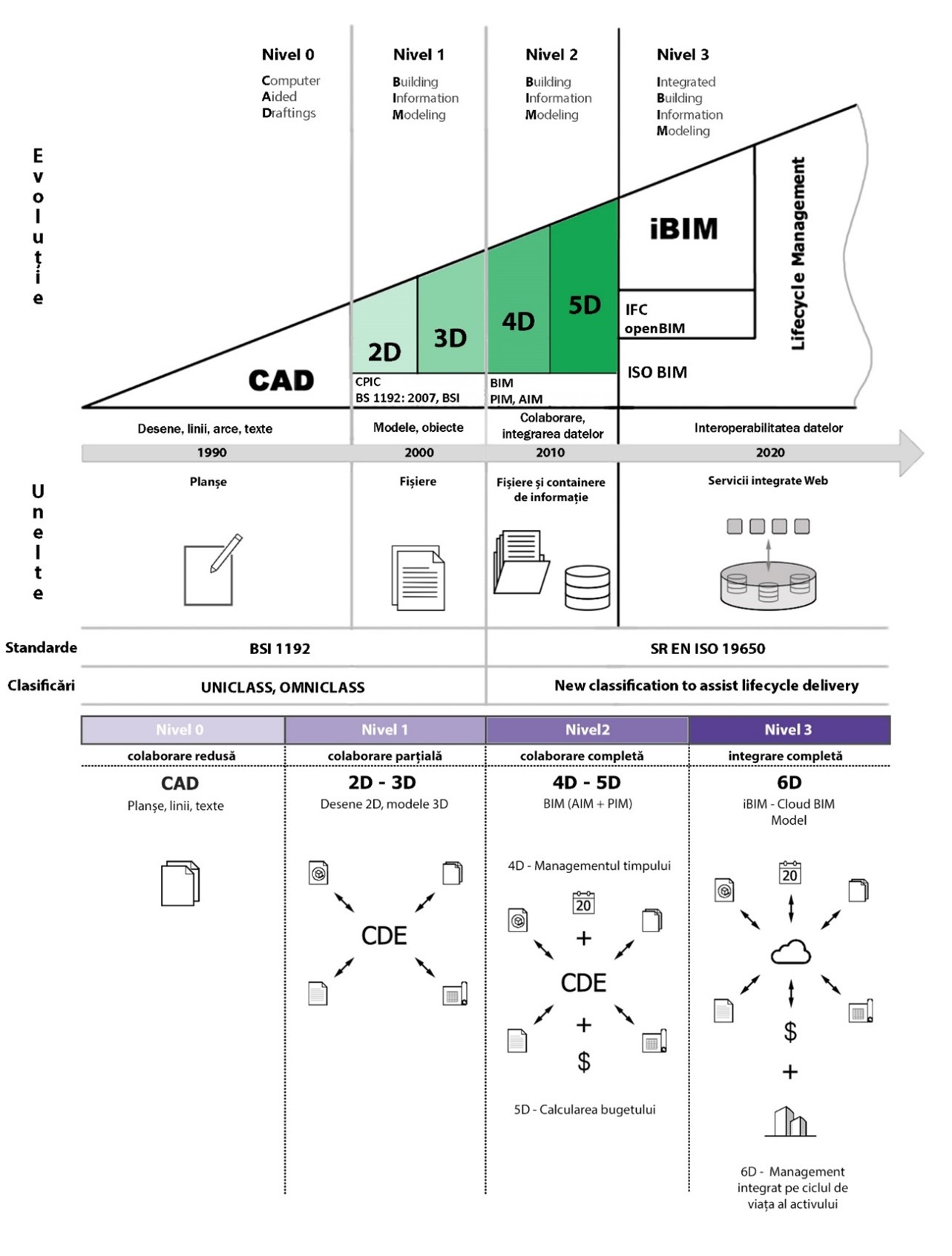
Fig.3 – BIM Maturity Levels and their connection with BIM Dimensions
As BIM concepts have crystallized and BIM standards have been developed, the need for reporting among various working procedures has emerged. This knowledge development has led to the introduction of new concepts, such as BIM maturity levels. The infographic created by Bew & Richards in 2008 regarding BIM maturity levels in the UK is fundamental. It has helped specialists and the AECO industry to better understand the core concepts and notions. They have been integrated into the British standard BS 1192 and are summarized as follows:
- Level 0 – limited collaboration, characterized by:
- Information is produced and exchanged in the form of drawings. 2D drawings are created using line, arc, and text representations, using CAD tools; representations become objects in the mind of the reader, requiring intense prior training to understand the information.
- Planning and design are done without the use of management tools, centralization, standards, or protocols for information sharing.
In Romania, most operators in the construction industry are at this level, even though many use BIM-capable software. Information exchange is still based on drawings, quantity lists, and other physically signed documents. Such deliverables do not facilitate communication between teams within a project and often create bottlenecks in investment development.
- Level 1 – partial collaboration, characterized by:
- Information is produced both as 2D drawings and as 3D models.
- A Common Data Environment (CDE) is used within the project delivery team, but the model is not always shared with stakeholders involved in the approval, oversight, and operation of the investment.
Essentially, Level 1 is a step above the basic level. It includes the exchange of information in the form of 3D models during the design phase, but information management is still based on written and physically signed documentation and printed 2D drawings. At this level, information management is standardized among team members. Even so, this level is still far from a fully collaborative approach.
Many design offices and some construction companies are currently adapting their working methods to digital collaboration flows. They utilize CDE platforms provided by software and AECO platform suppliers.
- Level 2 – full collaboration, characterized by:
- Collaboration is achieved through sharing and integrating essential data into the project information model.
- Teams involved in delivering and operating the construction use 3D information models throughout all stages of the construction life cycle. All deliverables are developed based on 3D models, and other data is extracted.
- Information containers – 3D models with all data and attributes added to construction elements are shared/federalized using open files accessible from any working platform (IFC) through the CDE; thus, a unified BIM model can be obtained, becoming the only source of information for all involved parties – the only source of truth.
- Time-related dimensions – 4D time management and 5D cost control are naturally added to spatial dimensions, making it relatively easy to incorporate them into the BIM model.
At this maturity level, the concepts PIM (Project Information Model) and AIM (Asset Information Model) are introduced and used; these consist of federalized information containers utilized in the delivery and operational phases (see Fig.2). This is the first truly BIM maturity level at which the anticipated benefits and advantages of the BIM concept can be realized.
- Level 3 – also known as the integrated BIM stage, characterized by:
- Completely integrated collaboration in a single shared model in real time. This is achieved through the sharing and interoperability of data from information containers using CDE platforms and cloud technology.
- All parties involved in the project use the information model and integrated databases throughout the entire life cycle of the construction, accessing or adding data based on their established roles in the responsibility matrix.
- Additional BIM dimensions: 6D – facility management & more.
- The possibility of automatic data collection is ensured, and information models are updated using IoT (Internet of Things), allowing for continuous monitoring of construction and enabling decision-making based on information from the digital model (digital twin).
Level 3 BIM maturity is the ultimate goal for the construction sector. The primary objective of this level is to achieve complete information integration in a CDE, which will be available to all parties involved in developing and operating the asset and who can add or modify information in the cloud.
Stages of Information Management Maturity
The international information management standard SR EN ISO 19650, (the BIM standard) in its first part – concepts and principles – defines 3 stages of digital maturity through a slightly different schematic than the Bew & Richards infographic, but very eloquent.
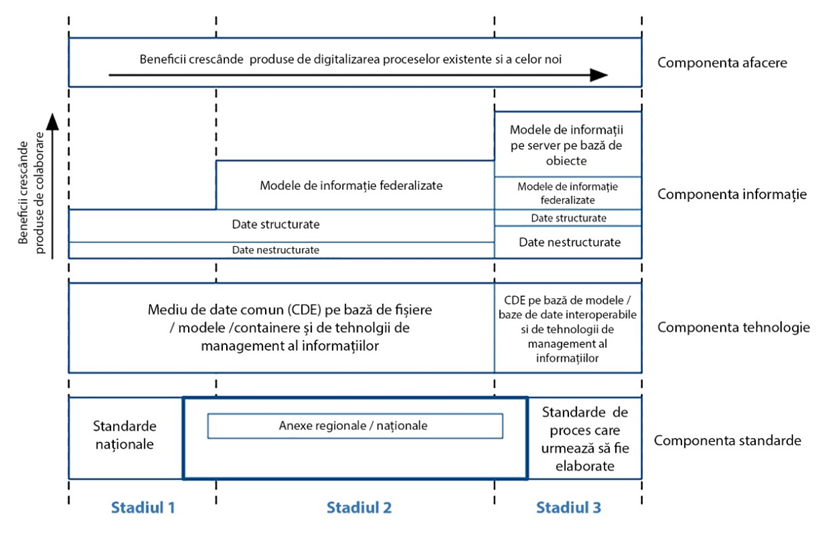
Fig. 4 – Perspective on digital maturity stages - Technological progress alongside increasingly evolved information management forms contributes to enhanced benefits. (excerpt from SR EN ISO 19650-1:2019, with permission from ASRO)
-
BIM Stage 1, where CAD 2D drawings and BIM 3D models (information models) are combined/shared to meet the requirements of national regulations regarding quality assurance and project management.
-
BIM Stage 2, where information models of individual disciplines (architecture, structural engineering, installations, etc.) meet ISO 19650 international standards, are shared and federalized, ensuring integrated project management of the construction project.
-
BIM Stage 3, where structured database systems of information models are interoperable, enabling the imposition of OPEN BIM as a project management system and its subsequent implementation and operation.
The succession of stages implies an increase in data integration from models, resolving technical coordination issues, and achieving data interoperability to allow advanced scenarios for querying databases, thus facilitating decision-making. Data federalization from Stage 2 is based on the exchange of models and files, while Stage 3 moves toward model management through structured platforms based on cloud technology that allow optimization of all BIM processes and direct querying of the model.
Real estate asset management activities are enhanced through the existence of the virtual model – digital twin – identical to the real one.
The specific situation of the AECO domain in Romania in the current BIM context is that it has not developed the necessary tools for effective management, such as: a modern classification system adapted to the investment life cycle.
BIM Dimensions
BIM dimensions are often confused with BIM maturity levels, as they are, in fact, totally different concepts. BIM dimensions define the aspects and information that come into play in the process of digitizing a construction project. BIM is much more than just 3D modeling of the asset. Based on the 3D digital model developed, other "dimensions" can be linked to
30.08.2022
ing. Cristian ONOFREI
dr.ing. Andrei CRIȘAN
arh. Dan PANĂ