


In recent years, technology in the construction industry has made extraordinary advancements. Building Information Modeling (BIM), drones, and AR and VR glasses are just a few of the new technologies that have left a defining mark on the field.
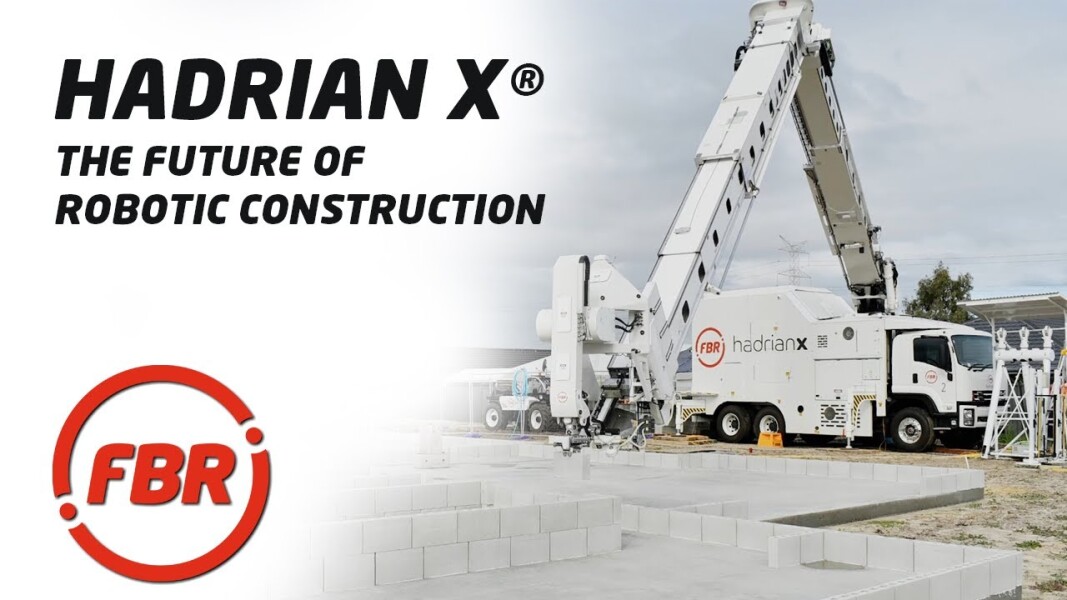
However, it is crucial to understand how robots and artificial intelligence will be used in construction. One robot that could change our perspective on building construction is Hadrian X. Developed by Fastbrick Robotics Ltd., an Australian robotics technology company, Hadrian X automates the loading, cutting, routing, and placement of all bricks, following a computer-assisted design, to complete the masonry of a house in just three days.
Hadrian X is the world's first mobile robotic bricklaying machine, capable of working safely outdoors in uncontrolled environments with speed and precision. It constructs block structures from a 3D CAD model, producing significantly less waste than traditional construction methods while improving site safety.
Hadrian X is made from composites of steel, aluminum, and carbon fiber. It is controlled by a network of computers, robotic vision cameras, servos, and a laser tracker that monitors its position. Its unique optimization software converts wall sketches into block positions and minimizes handling and product waste to enhance the efficiency of residential construction.
Each supplier involved in the home construction process, from architect to final product, will work from a single source of data, enabling parallel manufacturing of materials.
Based on current performance estimates, Hadrian X can lay approximately 3,000 bricks per day, compared to the 300-400 bricks per day that a human bricklayer can place. This, combined with its ability to work 24/7 in any conditions without needing breaks, means that a standard house can be fully constructed in just two or three days.
The structural integrity is four to five times greater because the machine uses industrial adhesive instead of traditional mortar. Additionally, the thermal and acoustic efficiency of the building sees an increase of up to 70%. Construction time is significantly reduced since the adhesive does not require waiting to set, unlike mortar.
This technology represents the evolution of traditional bricklaying and will allow bricklayers to transition into operators and supervisors of machines and job sites, moving away from the manual, labor-intensive, and risky practices.
Surse:
https://www.fbr.com.au/view/hadrian-x
https://www.designingbuildings.co.uk/wiki/Hadrian_X
https://newatlas.com/robotics/hadrian-x-ricklaying-robot-first-walls/