


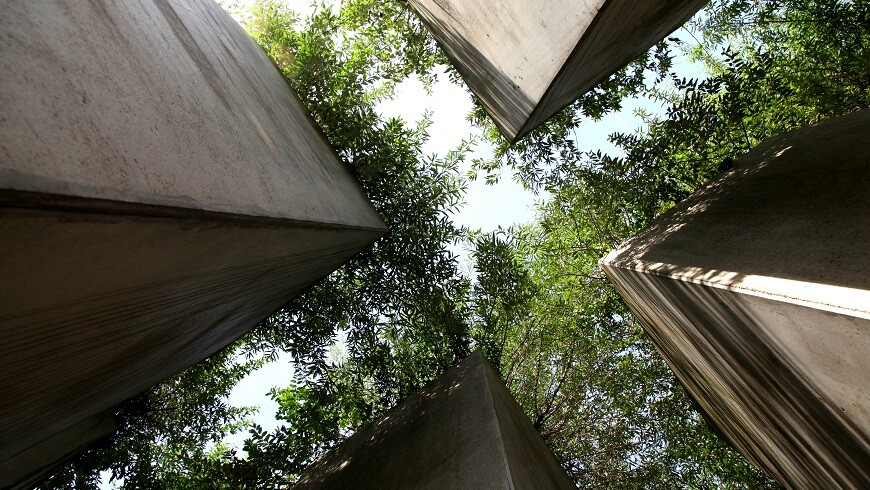
Currently, the cement industry emits large amounts of carbon dioxide harmful to the climate, but alternative magnesium carbonate-based binders could change this in the future, concrete may become a true storage vessel for this gas.
Cement production must drastically reduce its environmental footprint. Therefore, Empa researchers (the Swiss laboratory platform for technology and materials science) are working on alternative cement recipes that produce significantly fewer emissions or can even capture carbon dioxide from greenhouse gases.
 |
Being the most widely used product in the world, cement is indispensable, but its reputation has become quite tainted amid the ongoing climate debate. When mixed with water, sand, and gravel, it forms concrete, which is the foundation of our modern world. However, the material is primarily in the spotlight due to another property: producing one ton of cement emits about 700 kg of carbon dioxide (CO2) into the atmosphere. This amount is lower than that of steel or aluminum production, but it is the sheer quantity that makes a difference. |
The share of global CO2 emissions caused by the cement industry is currently around seven percent. However, this is likely to increase in the future, as demand is rising in Asia and increasingly in Africa, while production in Europe remains more or less stable.
The United Nations Environment Programme (UNEP) also calls for the immediate development and use of new, more eco-friendly cement-based materials that are also cost-effective. Empa researchers are thus working on alternative types of cement and concrete that produce less harmful greenhouse gases or can even bind CO2.
A promising solution is represented by so-called CSA cement, made from calcium sulfoaluminate, which requires temperatures about 200˚C lower, with an emitted CO2 amount of just 200 kg. Thus, in addition to the effect of reducing energy consumption, the amount of limestone in the recipe, the main culprit of CO2 emissions, can also be decreased. Besides CSA cement, researchers are looking into replacement constituents that accumulate as waste in other industries, including slag from blast furnaces used in iron production and fly ash leftover from coal combustion. Both products can be mixed with cement to help reduce CO2 emissions.
However, these secondary raw materials cannot meet the massive demand of the industry. Therefore, Empa researchers are paving new paths and identifying branches of industry whose residues are still underutilized, such as high-quality slag through the metallurgical recovery of precious metals from electronic waste, which can be mixed with cement while adhering to legal standards. It is also possible to use construction mineral waste for cement additives.
The type of cement additives could even be changed so that the burning process is completely eliminated. In so-called alkali-activated cement, components such as slag, ash, or calcined clay are activated for the desired chemical reaction using strong alkaline solutions, such as sodium silicates. The products of this reaction then combine to form a material whose compressive strength matches that of conventional burned cement.
The variety of cement and concrete products will increase in the future, and for building material manufacturers, this diversity leads to heightened requirements. It is also believed that using secondary raw materials would make local solutions more attractive if there were no transport routes, for example, because suitable industrial waste is produced near a cement factory.
You can find the article here.